Noodles & Company
- 4.7
- Rating
- 1.00M
- Installs
- Free
- Price

 Analysis by App-foxy
I found Noodles & Company most useful when I treated it as a quick bridge between deciding what to eat and actually placing an order. It is a free Food & Drink app from Noodles & Company, built around a rewards account and mobile ordering rather than around recipes, restaurant discovery, or general meal planning. That focus gives it a clear purpose: if I already want something from this restaurant, the app can make the next steps more convenient.
The experience is closely tied to connectivity. Menus, account details, rewards activity, ordering choices, and checkout all make the most sense when the phone can reach the service. I would not view it as a standalone dining tool that remains equally useful without a connection. Instead, I see it as a connected ordering channel, with the strongest value appearing when I am ready to choose a location, customize a meal, and complete an order.
How the connected ordering experience holds up
I find the connected ordering experience most useful when I treat it as a sequence rather than a quick string of taps: get the account and location right, make the choices, then confirm the outcome. That perspective helps me spot where a small pause can prevent a bigger mix-up, especially when I am ordering for someone else. The next section looks at how that flow works in ordinary use.
You May Also Like

 Blood Strike: 2.5 Anniversary
Blood Strike’s Loadouts Turn Every Drop Into a Tactical Gamble
A close look at Blood Strike’s custom loadouts: how fast access to signature weapons reshapes its battle royale rhythm, rewards preparation, and narrows the gap between fights.

 Pandora - Music & Podcasts
Pandora’s Music Is Easy to Start, but Harder to Recover
Pandora’s strength is its low-effort path from a seed to a station. Its weak spot is how much confidence it asks you to place in connection, setup, and quiet recovery.

 8 Ball Pool
 Is Built on Rivalries, Rematches, and Routine
A close look at the rivalries, rematches, shared routines, and unanswered safety questions that turn a quick pool match into a persistent mobile community.

 Samsung Music
’s Quiet Strength Is Playing What You Already Own
Its reach comes less from spectacle than from dependable access to a personal library. That simplicity is both the app’s strongest retention engine and its ceiling.

 AccuWeather: Weather Radar
AccuWeather Review: A Quick, Clear Forecast for Everyday Decisions
For everyday plans, the best forecast is the one you can understand quickly. AccuWeather makes rain timing, radar, and local conditions easy to act on, with a few trade-offs.

 Hill Climb Racing
Why Hill Climb Racing Still Turns Crashes Into One More Run
A tiny car, a bumpy hill and one more upgrade: Hill Climb Racing keeps resurfacing because its simple chaos makes every near-miss feel personal.
More From Our News Desk
View All News


From craving to checkout
The first thing I appreciate is the app’s narrow focus. It does not ask me to browse a huge collection of unrelated restaurants or manage several delivery services at once. The developer, Noodles & Company, keeps the experience centered on its own menu, rewards program, and ordering flow. That makes the app easier to understand than a broad food marketplace when I already know where I want to eat.
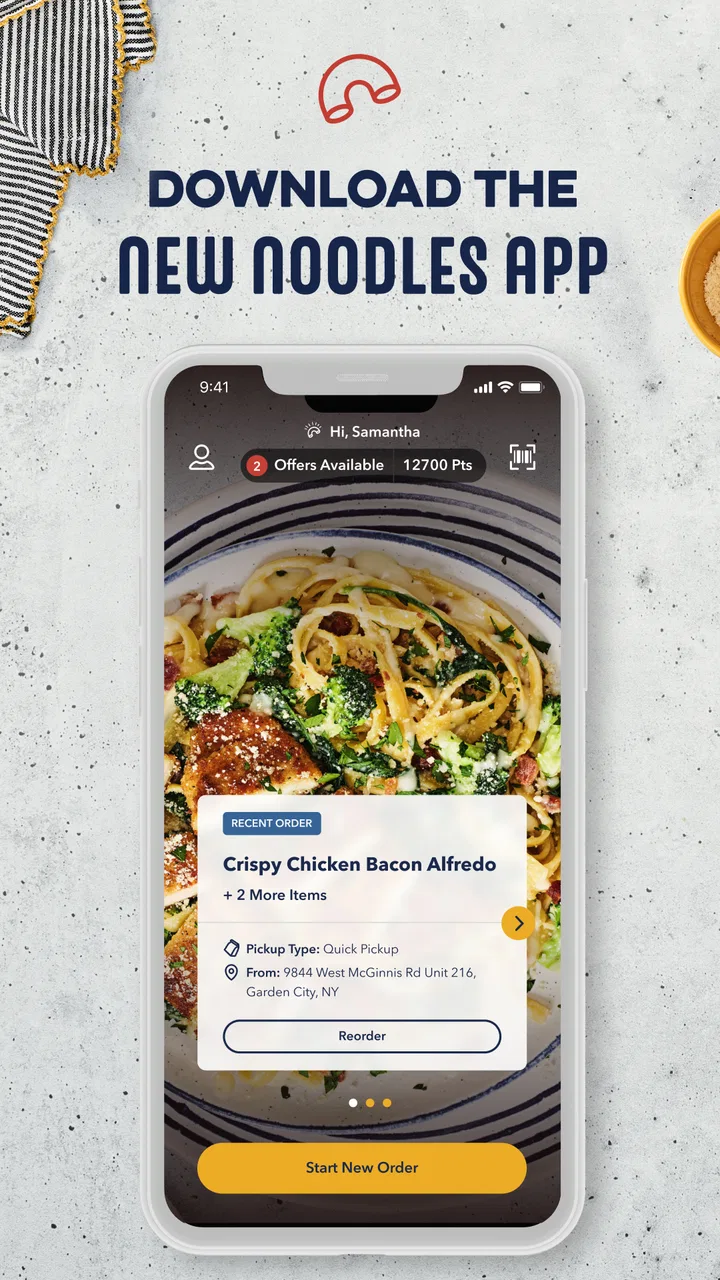
The rewards element is not just decoration. The store summary describes a points-based program, so the app is designed to connect ordering with repeat visits. In practical use, that means the account becomes more valuable over time than a one-off guest checkout would be. I would sign in before placing an order, especially if I am making a purchase I would otherwise complete at the counter, because the main reason to use the app is to keep the order and rewards activity in the same place.
Connectivity shapes nearly every meaningful moment. A weak signal can turn a simple menu check into a slow wait, and a connection change during checkout is more disruptive than a delay while browsing. I recommend opening the app before walking into a busy restaurant or while still on a reliable home or office network. That gives the menu and account area a better chance to load before I am standing in a crowded pickup space.
There is also a useful distinction between planning and ordering. I can think through what I want before committing, but the app’s real payoff arrives only when the connected steps work together: selecting the restaurant, reviewing the meal, applying the account context, and submitting the order. If I am merely looking for inspiration, a web search or the restaurant’s general information may be enough. The app becomes the better option when I intend to buy.
Why the phone context matters
This is a mobile-first tool in the most practical sense. I would use it during a lunch break, from the passenger seat while someone else is driving, or before leaving home for pickup. The screen is more useful when I already have a rough plan, because a phone is not the ideal place to linger over every possible choice while people are waiting behind me.
One everyday scenario shows where it fits well. Imagine I am leaving work with a short break and want noodles for dinner on the way home. I can use a stable office connection to review the available choices, select a convenient restaurant, and place the order before I leave. That is more comfortable than arriving at the counter, making decisions under time pressure, and then waiting while the order is entered. The app does not remove the need to pay attention, but it moves much of the decision-making to a calmer moment.
Another situation is a shared meal. If several people are choosing different dishes, I would slow down and review the order carefully rather than rushing through it. A phone screen makes it easy to tap quickly, but that convenience can work against accuracy when I am switching between preferences. My practical tip is to pause at the final review and confirm the restaurant, selected items, custom choices, and order timing before submitting.
The mobile setting also exposes a trade-off with notifications and attention. I would not open the app while driving, and I would avoid making a complicated order while walking through a busy station. A restaurant app is helpful when it reduces friction, but it can create new friction if the user is distracted, the signal is unstable, or the phone is nearly out of battery.
What happens when the connection misbehaves
Connected ordering needs a more cautious workflow than browsing a static menu. If a page takes longer than expected, I would avoid repeatedly tapping the checkout button. Repeated attempts can make it harder to tell whether an order was submitted, especially when the screen has not clearly refreshed. My safer approach is to wait, check the account or order area if it becomes available, and confirm the result before trying again.
The same caution applies after a payment step. I would not immediately assume failure just because the app appears slow. A brief pause may be caused by the network, the restaurant system, or the phone changing between Wi-Fi and mobile data. If the app returns to the ordering screen without a clear confirmation, I would first look for evidence of the order in the app before starting over.
This is one of the app’s less glamorous realities: the convenience depends on several connected services cooperating at the same time. The restaurant must receive the request, the account must remain associated with the order, and the phone must display the result clearly. That does not make the app poor, but it means I would keep a backup plan for time-sensitive meals. If I cannot verify what happened, I would contact the restaurant directly or place the order at the counter rather than risk duplicate submissions.
Recovery is easier when I prepare before the problem occurs. I check that I am signed into the intended account, make sure the selected location is correct, and avoid switching networks during checkout. I also keep the app updated when practical. The current version is 11.2.0, and the application requires iOS or Android version 9 or later, so compatibility is broad for many phones, but an older device can still make a connected ordering flow feel slower than it should.
Using it without wasting mobile data
I would not expect the app to consume a large amount of data merely because it is a restaurant app, but connected screens still use mobile data whenever they load menus, account information, or order updates. If I am watching my allowance, the sensible workflow is to browse and assemble the order on a trusted Wi-Fi connection, then use mobile data only when necessary.
There is a more important data-conscious habit than obsessing over every screen: avoid restarting the same order repeatedly. When the connection is unreliable, repeated refreshes and duplicate attempts are inefficient and can also create uncertainty about whether the restaurant received anything. One deliberate attempt, followed by a careful status check, is better than tapping through several times.
I also recommend reviewing the account details before a busy ordering period. A saved rewards account can make repeat use smoother, but it also means I should pay attention to which account is active. If I am using a family member’s phone or have recently changed accounts, I would verify the sign-in context before expecting points or order history to appear where I want them.
For privacy-minded users, the app’s connected nature is another reason to use it intentionally. I would open it when I need to order or manage rewards instead of leaving it running as part of an always-on routine. That keeps the app’s role simple and makes it easier for me to notice when a screen is waiting for a network response.
Rewards are the reason to return
The points-based program gives the app a stronger case than a mobile menu alone. If I visit Noodles & Company occasionally, the rewards account can make the app feel worthwhile because each order has a longer-term connection to future visits. That is especially relevant for people who already have a regular lunch or dinner habit at the restaurant.
However, rewards should not make me ignore the order itself. I would still compare the convenience of ordering in the app with ordering directly at the restaurant. For a complicated group order, a person at the counter may be better positioned to answer an immediate question. For a routine meal, the app is more attractive because I can complete familiar steps without waiting in line.
My non-obvious tip is to separate reward tracking from reward chasing. I would use the app consistently when it fits my normal routine, but I would not make an unnecessary restaurant trip simply to keep using it. The program adds value to a purchase I already want; it is less compelling as a reason to spend money I would not otherwise spend.
Who will get the most from it
I think this app suits regular Noodles & Company customers, people who prefer ordering ahead, and anyone who wants a restaurant-specific rewards account instead of juggling several food platforms. It is also a good match for users who know their usual meal and want a repeatable mobile process.
The audience is narrower than the high rating and large install base might suggest. The app has an average rating of 4.7 from around 18 thousand ratings, with more than a million installs, which indicates that many people find the experience useful. Still, popularity does not change the basic question: will I order from this restaurant often enough for a dedicated app to earn space on my phone?
I would skip it if I rarely eat at Noodles & Company, prefer discovering many restaurants in one place, or need a tool that compares delivery fees and menus across competing businesses. A general delivery marketplace is better for variety and cross-restaurant comparison. A restaurant website may be sufficient for someone who wants occasional information without maintaining another mobile account. The dedicated app wins when loyalty and repeat ordering matter more than breadth.
Small frictions worth knowing before installing
The biggest limitation is not a missing novelty feature; it is dependence on a working connection at the moment I need the app most. A weak signal can affect the transition from browsing to checkout, and a network handoff can make the result unclear. That is why I prefer placing an order before leaving a reliable connection rather than waiting until I am already outside or near the restaurant.
There is also a mental cost to having a separate app for one restaurant. Even when the app is free, it takes storage, attention, and account management. The free price removes the financial barrier, and the Everyone age rating makes it broadly accessible, but those facts do not automatically make it necessary for every customer. I would install it when the rewards and ordering convenience match my habits, not simply because there is no download charge.
Another trade-off is control versus speed. The app can make a familiar order faster, but speed encourages careless taps. I would treat the final review as essential, particularly for a shared meal or a pickup made on someone else’s behalf. A few seconds of checking can prevent the much bigger inconvenience of arriving with the wrong order or discovering that a connection problem left the request unresolved.
My connectivity verdict
After using it as a connected ordering tool, I see Noodles & Company as a focused, practical app rather than a complete food companion. Its best moments happen when I have a dependable connection, a clear restaurant choice, and a reason to use the points-based rewards program. In that situation, it can move ordering away from a crowded counter and into a more controlled part of my day.
I would recommend it to repeat customers who want mobile ordering and account-based rewards in one place. I would be more reserved with occasional diners, people who compare many restaurants before choosing, and anyone who regularly orders in areas with unreliable service. For those users, a browser or broader food-ordering service may be simpler.
The final practical rule is straightforward: prepare the order on a stable network, verify the restaurant and account before submitting, and confirm the result instead of tapping repeatedly when the screen stalls. Used that way, the app’s connectivity is mostly an advantage. It does not replace good judgment, but it makes a familiar Noodles & Company visit easier to organize, which is exactly where this free Food & Drink app delivers its strongest value.
FAQs for Noodles & Company
01What is Noodles & Company app used for?
The Noodles & Company app is designed to provide a seamless experience for ordering your favorite dishes from their menu. It allows you to customize your meals, schedule pickups, and even earn rewards through their loyalty program. The app also offers exclusive deals and promotions, making it a convenient tool for regular customers.
02How can I earn rewards using the Noodles & Company app?
By signing up for the Noodles Rewards program within the app, you can earn points with every purchase. These points can be redeemed for discounts or free menu items. The app also notifies you of special promotions and bonus point opportunities, making it easier to maximize your rewards.
03Does the app offer delivery options?
Yes, the Noodles & Company app offers delivery services in select locations. You can enter your address to check if delivery is available in your area. The app provides real-time tracking of your order, ensuring you know exactly when your meal will arrive. Delivery fees may vary based on location.
04Is the Noodles & Company app user-friendly?
The app is designed with user experience in mind, featuring an intuitive interface that simplifies the ordering process. With easy navigation, you can quickly browse the menu, customize orders, and find nutritional information. The app also supports secure payment methods, ensuring a safe and hassle-free transaction.
05Are there any exclusive benefits to using the app?
Yes, the Noodles & Company app offers exclusive benefits such as app-only deals, early access to new menu items, and personalized offers based on your ordering habits. The app also allows you to save your favorite orders for quick reordering, enhancing the overall convenience for frequent users.
Pros
- User-friendly interface enhances browsing.
- Extensive menu with diverse options.
- Customizable orders for dietary needs.
- Quick and efficient delivery service.
- Loyalty program offers valuable rewards.
Cons
- Limited availability in some regions.
- Occasional app freezes reported.
- Some features require account creation.
- Delivery fees can be high.
- Inconsistent portion sizes noted.

Noodles & Company
Gallery